Lessons
All lessons Piano Voice
About
About Nick Studio Pricing FAQ
Book
Schedule Book a Call

8-Week Program · Ukrainian Village, Chicago

Jazz Piano
Bootcamp.The real thing,
in eight weeks.

Voicings, comping, the blues, the first vocabulary of improvisation, and a jazz standard you can play from memory by the end. Taught by a working Chicago jazz pianist and competition winner. For students with some piano background who want to start actually playing jazz.

8 lessons · 50 min each · weekly cadence · credits valid 1 year from purchase

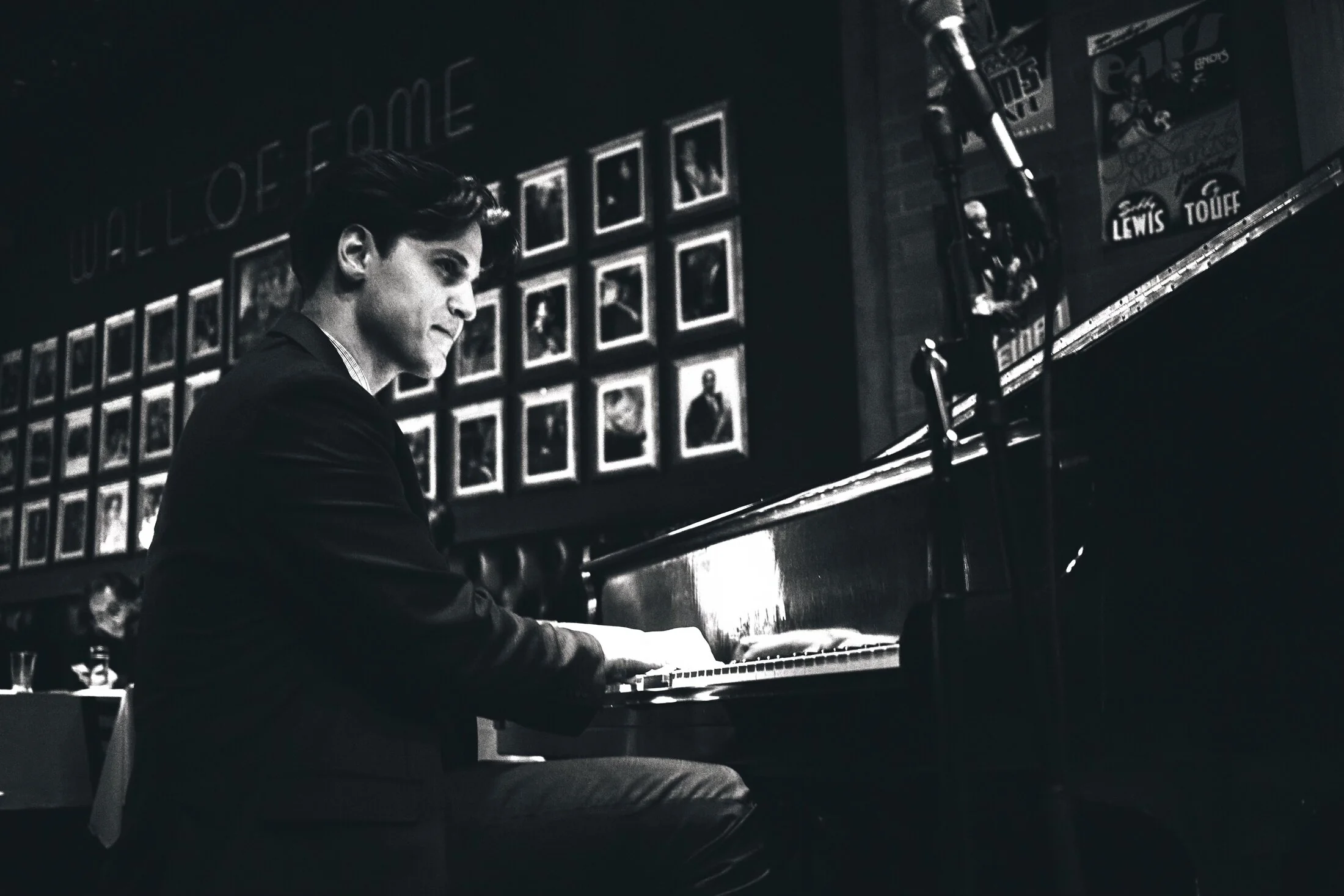
Nick Olynciw performing jazz piano at Andy’s Jazz Club, Chicago
Who this is for

For players who want to cross into jazz.

The Bootcamp is built for students who can already play piano in some form — classical training, pop chord chart, self-taught noodling — and want to learn how the music they hear at Andy’s or on a Bill Evans record actually works. Eight weeks of focused work to get you from the outside looking in to playing real jazz vocabulary.

The classical player curious about improvisation
You read music well and have technique, but the idea of playing something not written on a page is intimidating. The Bootcamp builds the bridge — theory you already half-know, applied in a way that lets you finally improvise.
The intermediate player ready for “real” harmony
You can play pop and chord-chart styles but the chord symbols in a jazz fake book look like a different language. Eight weeks gets you fluent in the language — rootless voicings, extensions, ii–V–I, the blues. The way actual jazz pianists think.
The lapsed jazz player who wants a reset
You studied jazz once, life happened, and now the vocabulary feels rusty. The Bootcamp is a focused eight-week push to get the language back under your fingers — with someone who’s playing this music every week.
The curriculum

The 8-week arc.

The exact path bends to your level — a classical player will spend more time on improvisation, an intermediate jazz player more on voicings. But the shape of the program is consistent.

Weeks 1–2
Voicings that sound like jazz

Rootless left-hand voicings. Tritone substitutions. Extensions (9ths, 11ths, 13ths) used the way actual jazz pianists use them. By the end of week 2 you’ll voice chords on the page like a record, not like a textbook.

Weeks 3–4
Comping & the blues

Comping rhythms behind a soloist (or just yourself). The 12-bar blues form, the jazz blues, minor blues. Comping is where most jazz actually happens — this is where you learn to sound like you belong on a bandstand.

Weeks 5–6
Improvisation fundamentals

Scale-chord relationships, target notes, the “blues licks” everyone borrows, the basic shapes of bebop language. Not memorizing solos — learning to actually generate lines yourself.

Weeks 7–8
Your first standard

Pick a tune — an Autumn Leaves, a Misty, an All The Things You Are. The final two weeks polish one standard into a piece you can play from memory: head, comping, a chorus of improvisation, the works.

Why Nick

A working jazz pianist’s studio.

Jazz teaching that comes from someone who’s actively inside the music — not someone who learned it once and stopped playing. Nick gigs jazz every week at venues across Chicago. The vocabulary in your lessons is the vocabulary he’s using on the bandstand.

That changes what teaching feels like. The theory isn’t abstract. The standards aren’t hypothetical — they’re tunes called on gigs the night before. Improvisation isn’t a topic in a book; it’s the thing happening in the lesson, demonstrated and broken down in real time.

In-person students play on a real acoustic piano, with a Fender Rhodes and Hammond B3 in the room. More about the studio →

Awards & Recognition
Winner
Jacksonville Jazz Piano Competition
Winner
AJPC Bösendorfer Award
Alternate
American Pianists Association
A jazz teacher who actually plays jazz.
Nick Olynciw performing at Andy’s Jazz Club, Chicago
Regular Venues
Andy’s Jazz Club
Coq D’Or at the Drake Hotel
The details

How the Bootcamp works.

Format
Eight 50-minute private lessons, one-on-one. In-person at the studio or online via Zoom — same lesson, same rate.
Cadence
Weekly is the rhythm — jazz vocabulary needs steady reinforcement, not big gaps. Pick a slot and stick with it.
Investment
$850 for the 8-lesson pack. $106 per lesson — below the drop-in rate, above the semester rate.
Validity
Credits valid 1 year from purchase. Long enough to absorb a vacation, short enough that you’ll finish what you started.
Prerequisites
Some piano background. You should be able to read a basic chord chart or read music in some form. If you’re a complete beginner, the Pop Piano Jumpstart is the better starting point.
After the 8 weeks
Most Bootcamp students continue into a Semester Pack to go deeper — more standards, more improvisation, building a real working repertoire.
What students say

Real lessons, in students’ words.

“He’s done an amazing job at building my skills and understanding from the ground up. He paces what I am learning very well so that it can feel challenging but doable.”

Cass H.
Jazz piano student

“He always provides repertoire that matches your current level while still challenging you to grow technically and musically. Excellent at guiding students through improvisation in a way that feels approachable and rewarding.”

Giuliano G.
Adult pianist
Frequently asked

Common questions about the Bootcamp.

How much piano do I need to play already?

If you can read a basic chord chart or read music at any level — classical, pop, anything — you’re ready. The Bootcamp builds the jazz layer on top of existing piano skills. Complete beginners are better served by the Pop Piano Jumpstart first.

Which standard will I learn?

Your pick, within reason. Common first-bootcamp tunes are Autumn Leaves, Misty, Blue Bossa, All The Things You Are, and Body and Soul — classics that teach the essentials and that you’ll actually use. If you have a specific tune in mind we work toward it.

I’ve never improvised. Will I be able to by the end?

Yes — in a starting form. Improvisation is a lifelong skill; eight weeks won’t make you Brad Mehldau. But you’ll leave with the building blocks: target notes, basic vocabulary, the confidence to play something that wasn’t written down. That’s the whole point.

In-person vs online?

Both work for jazz. In-person means the Rhodes and B3 in the room and the chance to play together at a real piano. Online means you’re working on the instrument you actually practice on, with the convenience of no commute. Same rate, same lesson.

What if I miss a week?

Reschedule with 24 hours notice and your lesson moves. Pack credits are valid 1 year from purchase — the buffer’s built in.

What happens after the 8 weeks?

Most Bootcamp students continue into a Semester Pack — same teacher, same time slot, going deeper on standards and improvisation. You can also take what you learned and run with it on your own.
See the full studio FAQ →
Cross into jazz in eight weeks.
The vocabulary, the standards, the language — from someone who’s playing it.
Book a Free Call