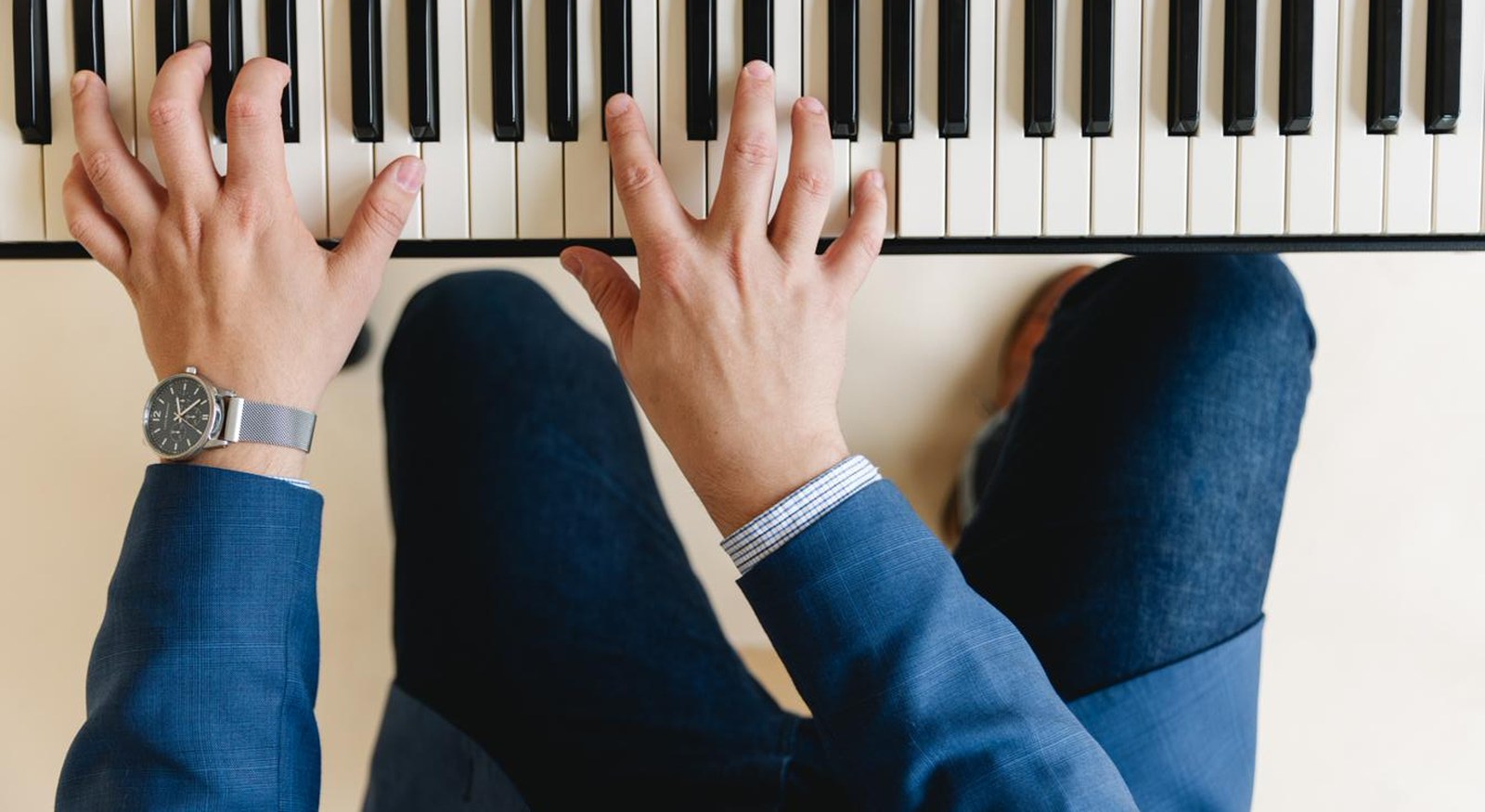
You’re an adult who’s always meant to learn piano. Maybe you took lessons as a kid and quit. Maybe you never started. Either way, you’ve been thinking about it for a while, and you want a teacher who’ll meet you like the adult you are.
You’re not too old. You don’t need a children’s book.
The biggest thing adult students tell me before their first lesson is some version of: “I’m worried I’m starting too late.” You’re not. Adult brains learn differently than kid brains, but they don’t learn worse. Adults bring focus, life experience, clear taste in music, and the ability to practice deliberately, all of which are huge advantages.
The other thing adults tell me: “I don’t want to spend six months on Beyer or Hot Cross Buns before I get to play real music.” You won’t. Lessons here are built around the music you actually want to play, starting from your first session. The technique and theory get folded in alongside real songs, in service of them, not as a gauntlet to clear before you’re permitted to enjoy yourself.
What “starting from scratch” actually looks like
If you’ve never touched a piano: the first few lessons are about getting comfortable with the keyboard, learning a small but real vocabulary of chords, and starting to play simplified versions of songs you already love. Within a month, most students can play a recognizable version of a song they care about. Within three months, most are playing several songs and starting to hear how the music is built.
If you took lessons as a kid: we’ll figure out together what you remember and what you don’t. We’ll fill in the gaps in your reading or your technique as needed, but we won’t make you start from zero just because it’s been a while. That’s a waste of your time.
Why a working musician matters when you’re returning to piano
Most piano teachers are teachers first. That’s a real craft and not to be dismissed. What a working musician adds is current ears. The harmony being taught is the harmony being played at venues this weekend. The advice about a tune isn’t theoretical. It comes from someone who played it Friday night at Andy’s. For an adult learner who wants to actually develop a relationship with the instrument rather than retread method books, that current vocabulary makes a difference in how every lesson lands.
It also means lessons aren’t one-way. With multiple keyboards in the room, you can work out a voicing on the piano and hear me play it back from the Rhodes so you can hear it in context. We comp through a tune together, you on the changes, me on the bass figure. That kind of trading is hard to do at a music school with thirty-minute slots and a single piano.
The room
Lessons happen in a private Ukrainian Village studio, lamp-lit, lived-in, just teacher and student. Real acoustic piano. A Fender Rhodes and a Hammond B3 nearby for the moments the music calls for them. Recording capability for the pieces worth capturing. For most adult students, the room itself is part of what makes the lesson work: an hour where the studio is the only thing happening, and the rest of the day waits outside. More about the studio →