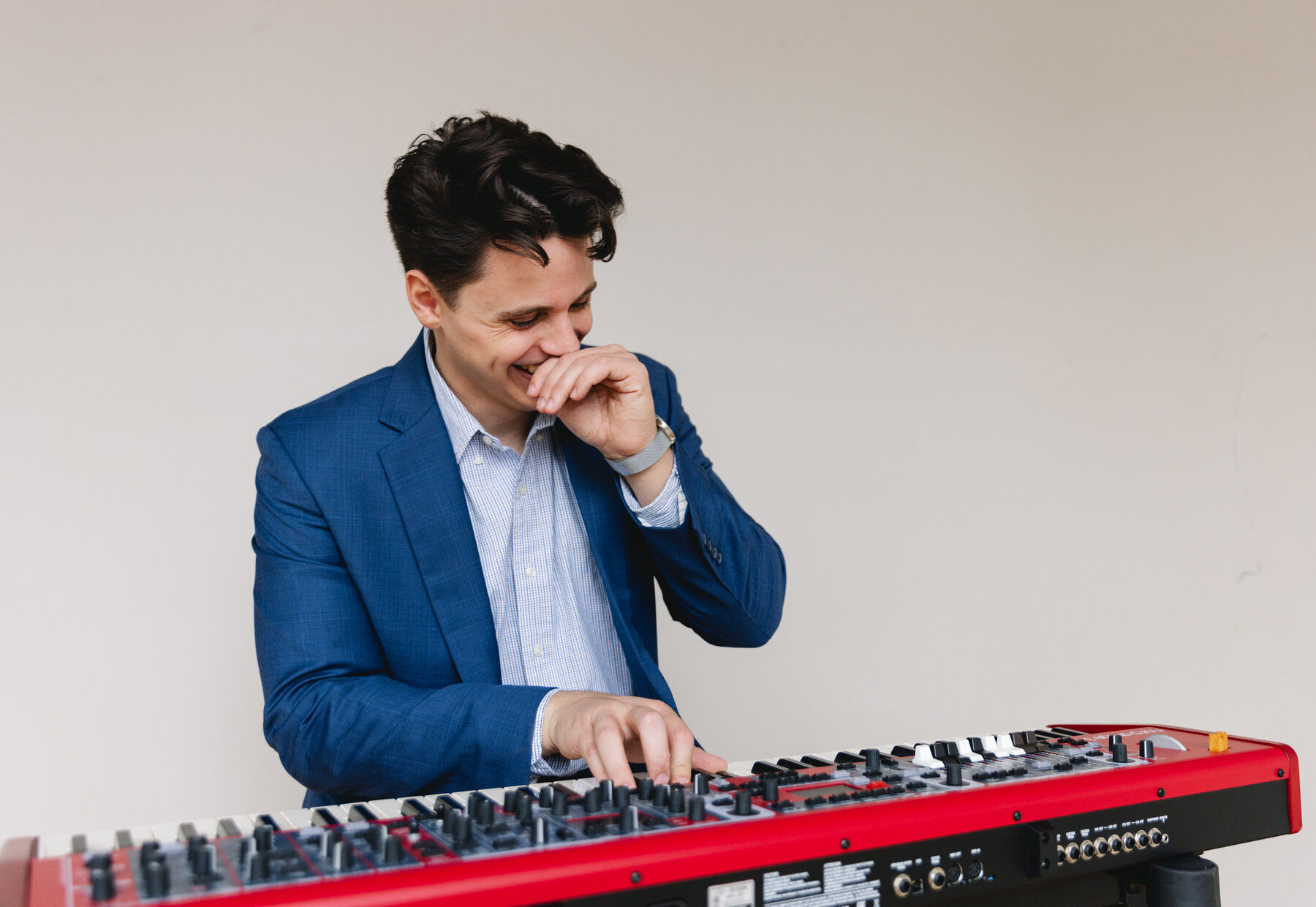
If you’ve been chasing the sound of D’Angelo or Cory Henry or H.E.R. or any of the contemporary R&B players who blur the line between gospel, jazz, and soul. You know it’s a specific musical world. It has its own harmonic language, its own rhythmic feel, and a level of harmonic sophistication that takes serious study.
The R&B harmonic language
Modern R&B and neo-soul lean heavily on extended chords, suspended voicings, secondary dominants, and a particular kind of chromatic motion that comes out of gospel piano traditions. Once you start hearing it, you can’t unhear it. The same handful of harmonic moves show up across decades of records, from Stevie Wonder through Erykah Badu through current artists. We’ll spend real time on those moves: how to hear them, how to voice them, and how to deploy them naturally inside songs you already love.
For in-person students, lessons happen at the studio with a real Fender Rhodes and a Hammond B3, the two foundational R&B/soul instruments. Not digital approximations. The actual ones, in the room, used during regular lessons. More on the studio →
Closely related: the rhythmic feel of R&B is a study in itself. The pocket, the way comp rhythms sit slightly behind the beat, the role of the left hand, these aren’t things you absorb from notation. They’re things you absorb from records and from playing with other musicians who already have them. We’ll work on transcribing, listening with intent, and getting your playing closer to that feel.
Where this comes from
This isn’t a style I picked up to round out a teaching menu. R&B and gospel-adjacent music is a place I genuinely live as a working musician, both in my own playing and in the kinds of gigs I take across Chicago. That matters because the difference between teaching this style well and teaching it in a way that misses the point is mostly about whether the teacher actually hears it the way the music is meant to be heard.
For in-person students, the studio has the two instruments R&B piano study lives on: a real acoustic piano, a Fender Rhodes, and a Hammond B3 for the gospel/soul-organ side of the tradition. The actual instruments, in the room. More about the studio →