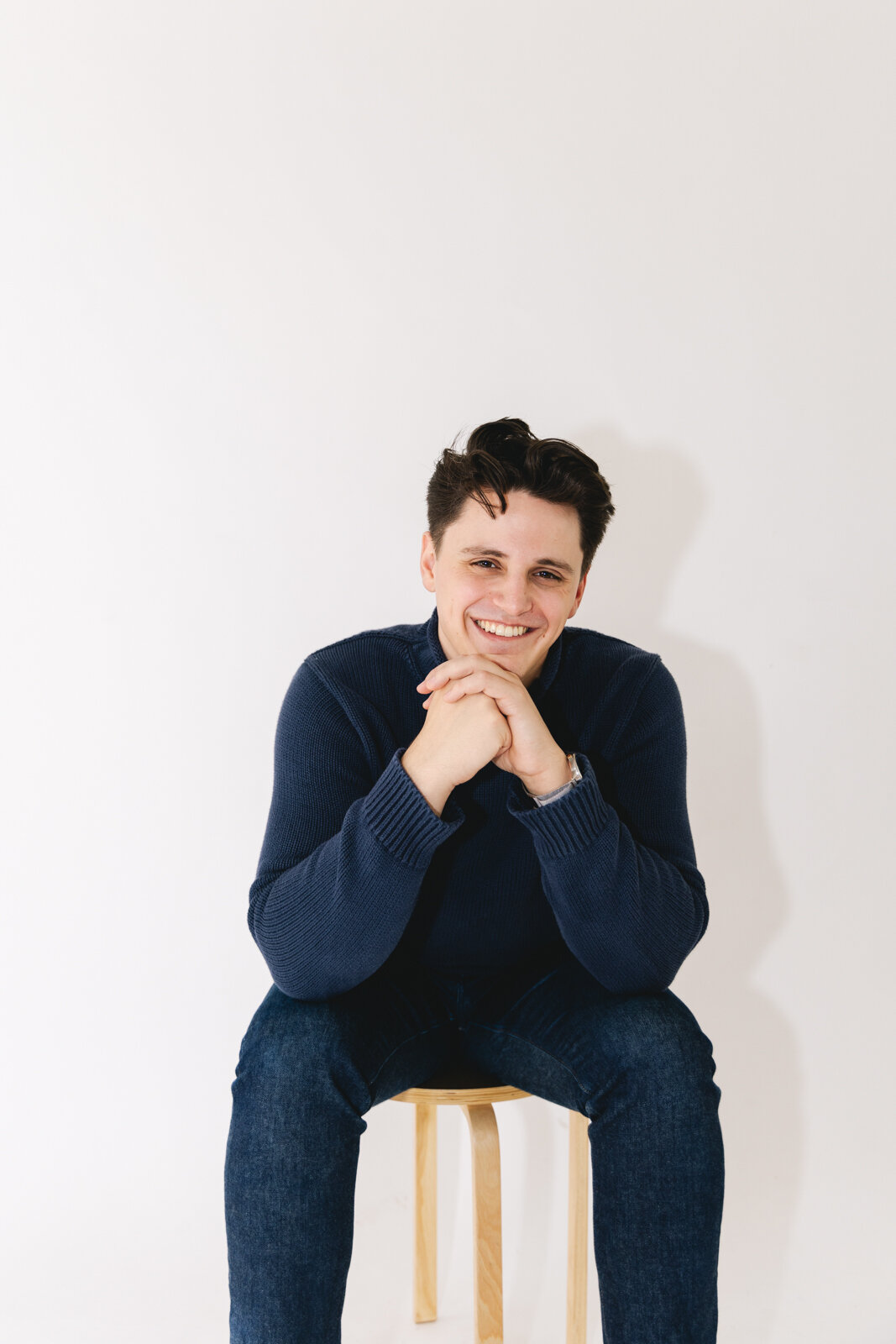
If you’re a parent looking for a piano teacher for your teen, you’re probably weighing two things: is this person actually qualified, and is this going to be the right fit for a kid who’s either checked out of traditional lessons or never had them and is skeptical?
For the parent reading this
The qualification piece is straightforward: your teen would be studying with a working professional musician (graduate study at Western Michigan University, undergrad at the University of North Texas, awards including Winner of the Jacksonville Jazz Piano Competition, the AJPC Bösendorfer Award, and the American Pianists Association Alternate). Taught at the Chicago Academy for the Arts, 2023–2026. Performs regularly at Andy’s Jazz Club, the Coq D’Or at the Drake Hotel, and venues around the Midwest.
The fit piece matters more for teens. Most teens who’ve had unsuccessful piano lessons share a common experience: a teacher who insisted on classical-method-book progression and didn’t let them play anything they actually liked. That’s not how lessons work here. If your teen wants to play Adele, Sufjan Stevens, Bruno Mars, the new song they discovered last week. That’s where we start. Technique and theory get folded in alongside real music, in service of it.
The studio setup
Lessons are one-on-one. Parents are welcome to drop off and pick up, students typically learn fastest when it’s just the two of them in the room. The studio is in Ukrainian Village; the exact address is shared after booking. Zoom is available at the same rate for weeks a student is traveling or sick.
Age-wise, lessons here work best for students about 11 and up. That’s the point at which most students can engage with lessons independently and get the most out of them. We’ll talk about that at the first lesson.
What teens get out of this
The students who do best here tend to be ones who actually care about music, not necessarily ones who think they want to be professional musicians, just ones who connect with songs and want to play them. Within a few months, most are playing real music recognizably and starting to hear how songs are built. The longer-term goal is that they leave with a real, life-long musical skill, the ability to sit down at a piano and play.